

Owner's engineering
Who really holds the keys to your building?
At handover, nobody asks for the source code of the automation systems. Yet that is where twenty years of operating independence are decided.
Technical
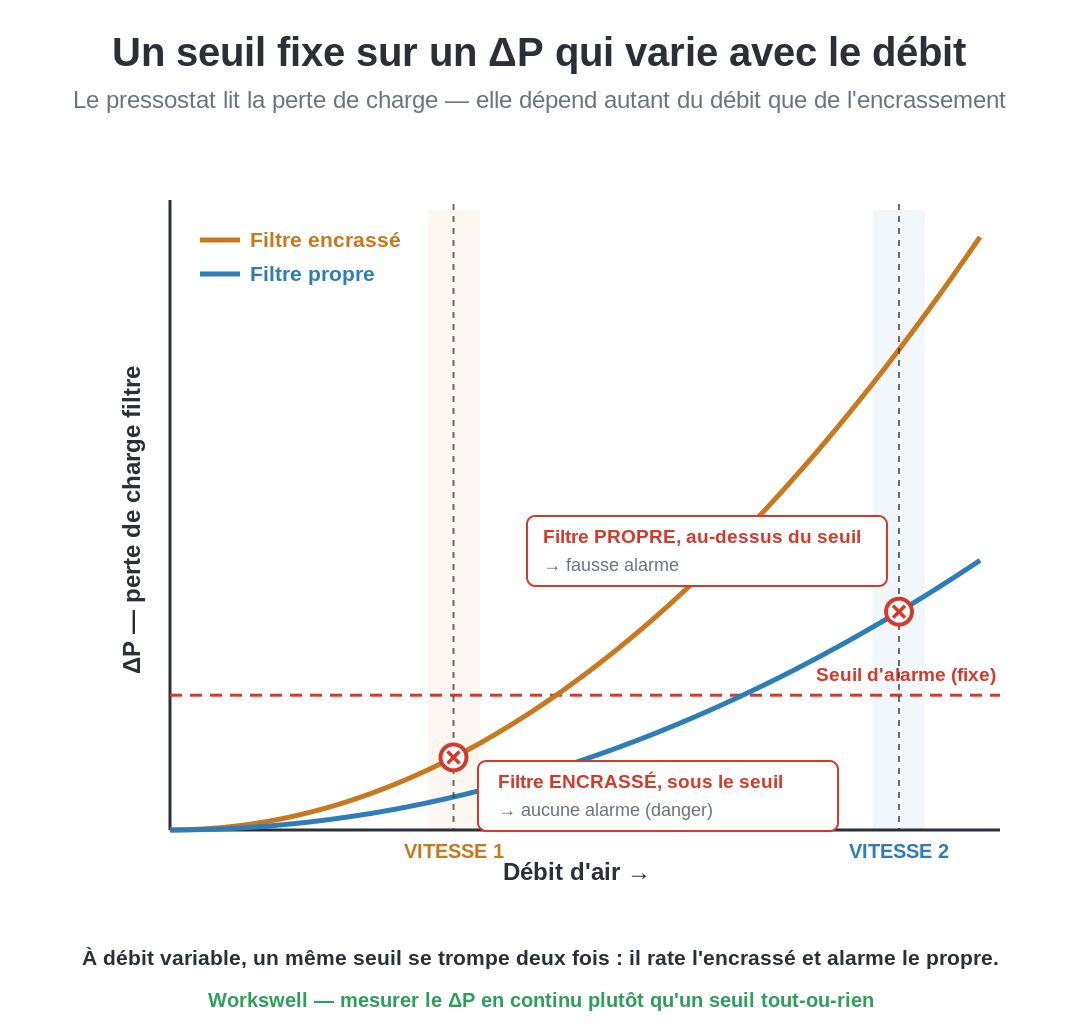
A classic reflex in specifications for air handling units: fitting a differential pressure switch to detect clogged filters.
On a constant-volume installation, that solution works perfectly well. But as soon as the air flow varies, a single fixed threshold becomes barely representative.
Because a filter’s pressure drop depends both on how clogged it is and on the air flow passing through it. And the relationship is not linear: as the flow rises, the pressure drop increases sharply. The same filter can therefore show very different pressure readings depending on the installation’s operating point.
A pressure switch set at nominal flow therefore ends up blind at part load and hypersensitive at full load.
At Workswell we recommend a differential pressure sensor with continuous ΔP measurement. Combined with flow measurement, fan speed or a reference operating point, it makes it possible to tell a normal pressure variation from an increase genuinely caused by filter clogging.
The sensor also provides useful information at commissioning. It allows the initial pressure drop of the clean filter to be checked and compared with the manufacturer’s data. Any later drift can then be assessed against a measured reference rather than a generic threshold.
The pressure switch remains relevant as a simple device or as a last line of safety. On a variable-volume installation, however, it should no longer be the only means of monitoring.
Are you drawing up specifications for an air handling unit or an MCR/BMS installation? Let’s discuss it.
Also worth reading
At handover, nobody asks for the source code of the automation systems. Yet that is where twenty years of operating independence are decided.
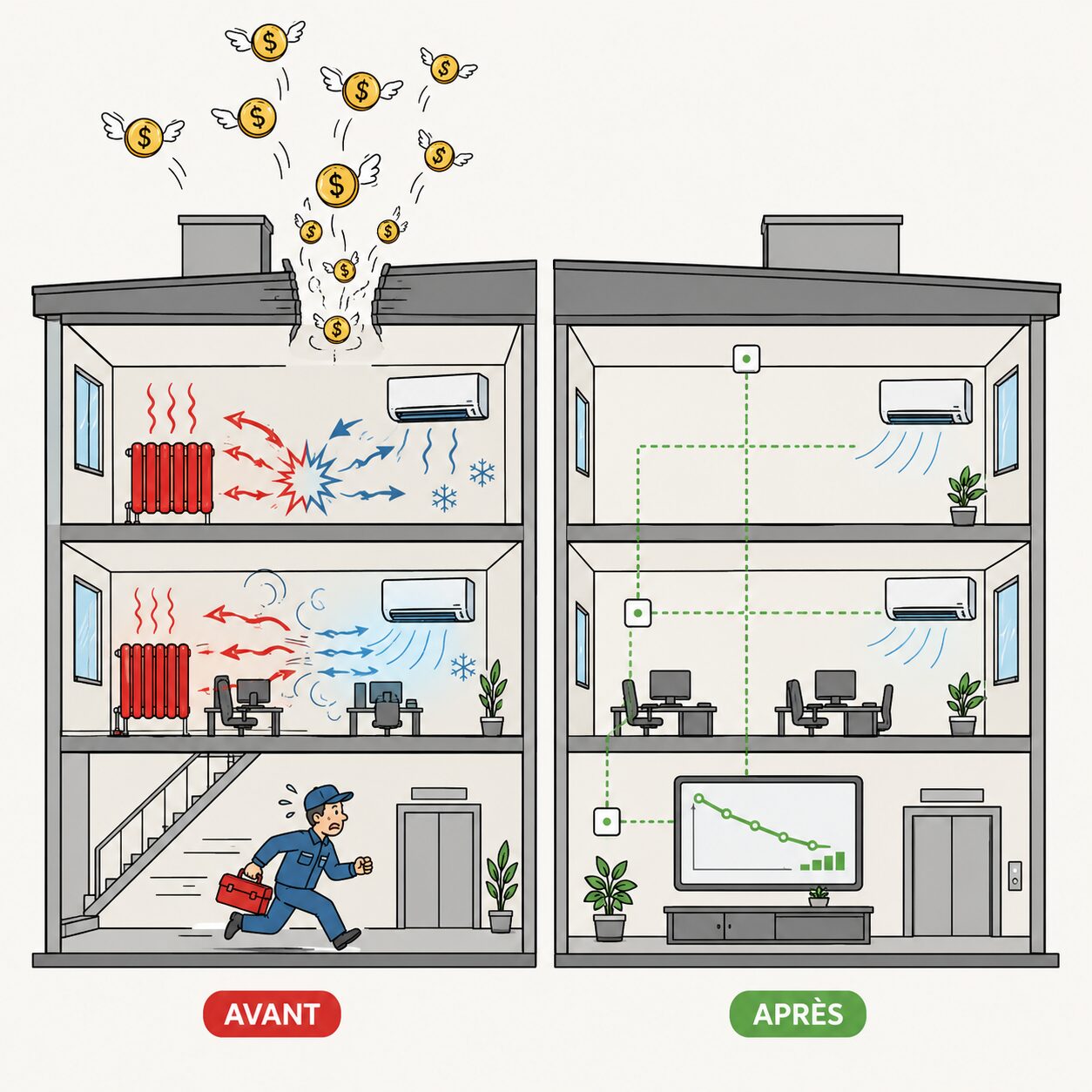
On the quote, controls is just one line. In operation, it is the line that decides whether the building consumes energy sensibly or wastes it quietly.
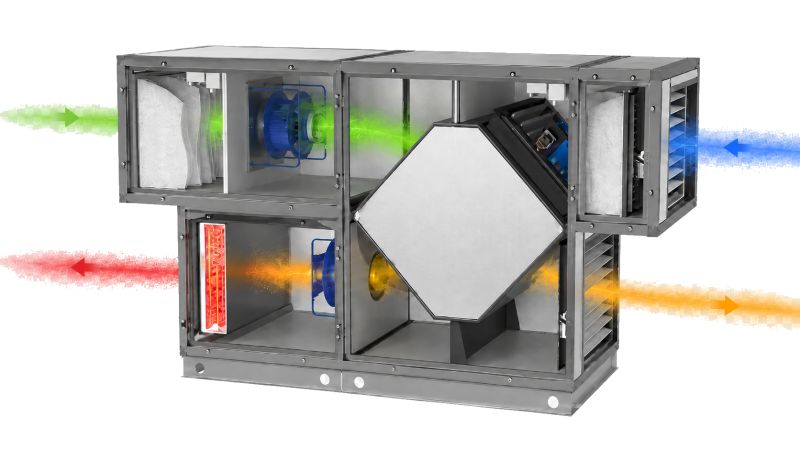
Daytime cold recovery, night-time free cooling and the right trade-off on temperature difference: three points that make the difference at 35 °C.
A first conversation is usually enough to gauge the savings potential and the data available.