Three points make the difference when temperatures climb.
Daytime cold recovery.
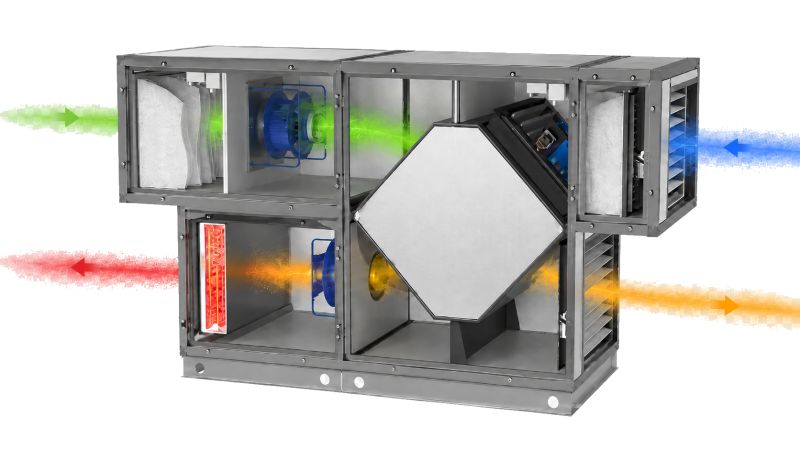
When it’s 35 °C outside and the building is at 25 °C, extract air is colder than fresh outdoor air. The heat recovery unit pre-cools the outdoor air by several degrees before it reaches the cooling coil: that’s cooling capacity you don’t have to generate.
Night-time free cooling.
At night, as soon as outdoor air drops below indoor temperature, the recovery unit is bypassed and that cool outdoor air is blown straight into the building. The goal: discharge the heat accumulated during the day and cool down the building mass before the next day’s heat.
Getting the trade-off right.
It all comes down to the temperature difference: active recovery when it’s warmer outside than in, bypass when it’s cooler outside. Logic that reverses the winter behaviour.
The equipment sets the potential. The control sequence decides what you actually get out of it at 35 °C.
Have an AHU that needs optimising before the next heatwave? Let’s talk.