
Cybersecurity
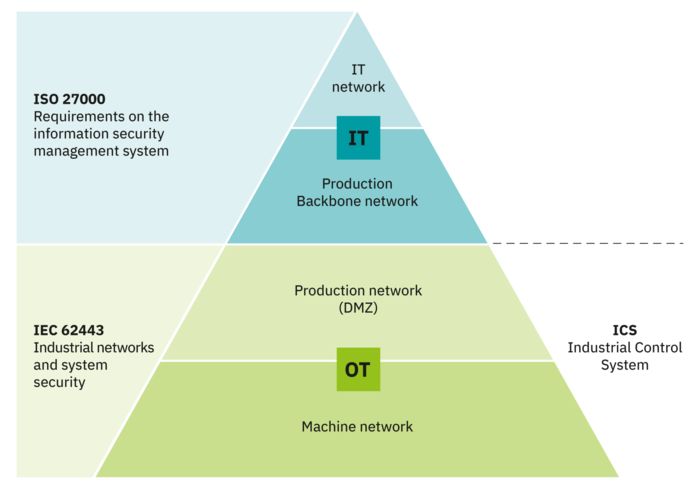
The IEC 62443 standard (Cyber Resilience Act)
Network segmentation, device authentication, access logging: IEC 62443 already covers most of the Cyber Resilience Act requirements, applicable from 11 December 2027.
Technical
The classic setup: a 0-10 V setpoint signal to the damper, a 0-10 V flow feedback signal for control. It works. But that’s all it does.
When the VAV box communicates over a bus, you get access to much more: Min/Max thresholds, the actual position of each damper, and the ability to change parameters remotely.
At commissioning, the gain is immediate. No need to walk to each damper one by one to check or correct a setting. Everything can be read and adjusted from the controls.
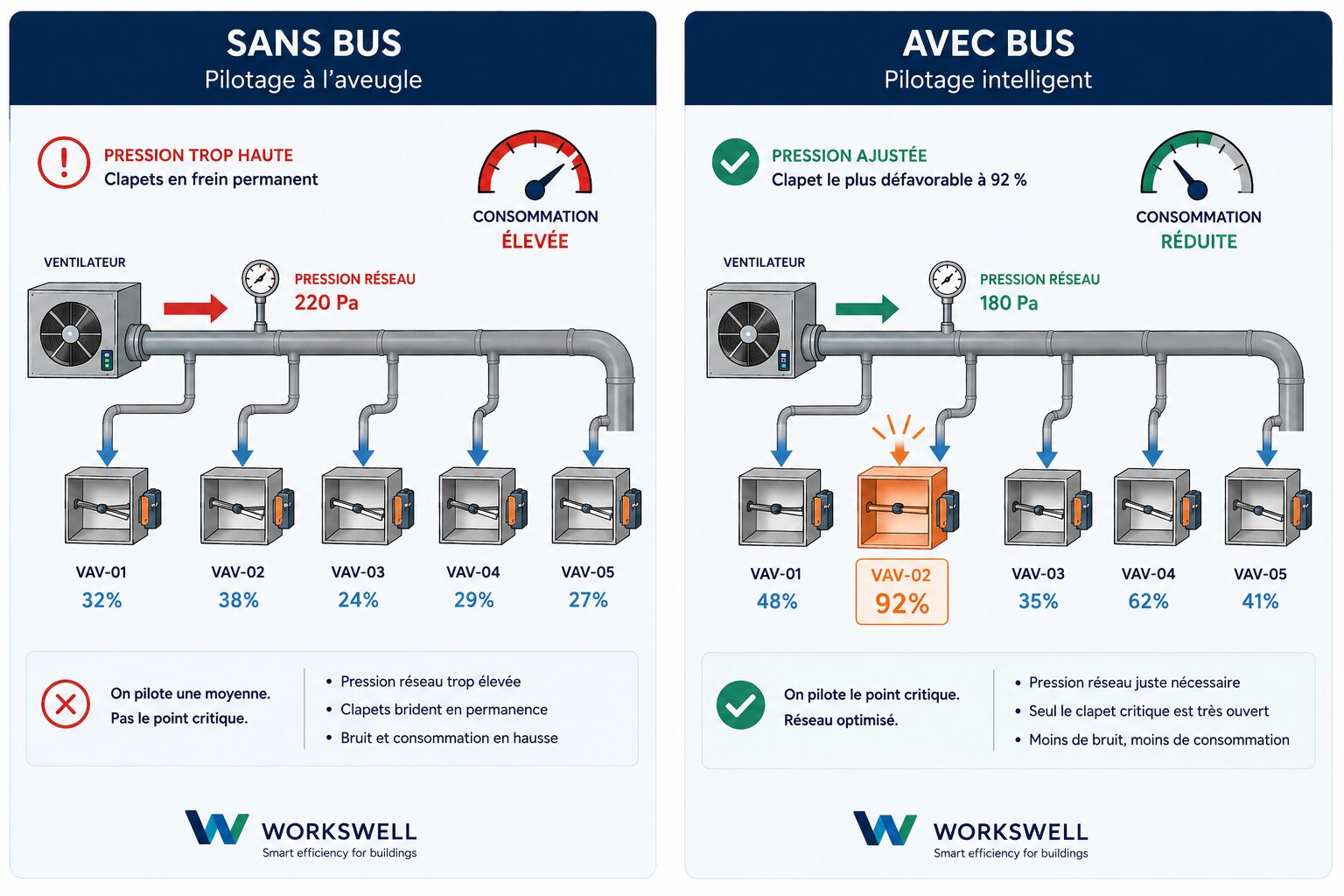
For network optimisation, actual position is the key data point. In most installations, pressure is set too high: every damper throttles, and the fan overconsumes. The right method: the most demanding damper, the one struggling hardest to reach its target flow, should sit between 90% and 95% open. Set pressure accordingly, and the rest follow naturally.
Without bus feedback, you don’t know where each damper actually stands. You’re flying blind. You’re wasting energy.
Have a project with communicating VAV boxes? Let’s talk.
Also worth reading
Network segmentation, device authentication, access logging: IEC 62443 already covers most of the Cyber Resilience Act requirements, applicable from 11 December 2027.

Workswell extends its offering with BAMO, its owner's project assistance service: end-to-end project steering, coordination of all stakeholders and SIA and KBOB compliance.
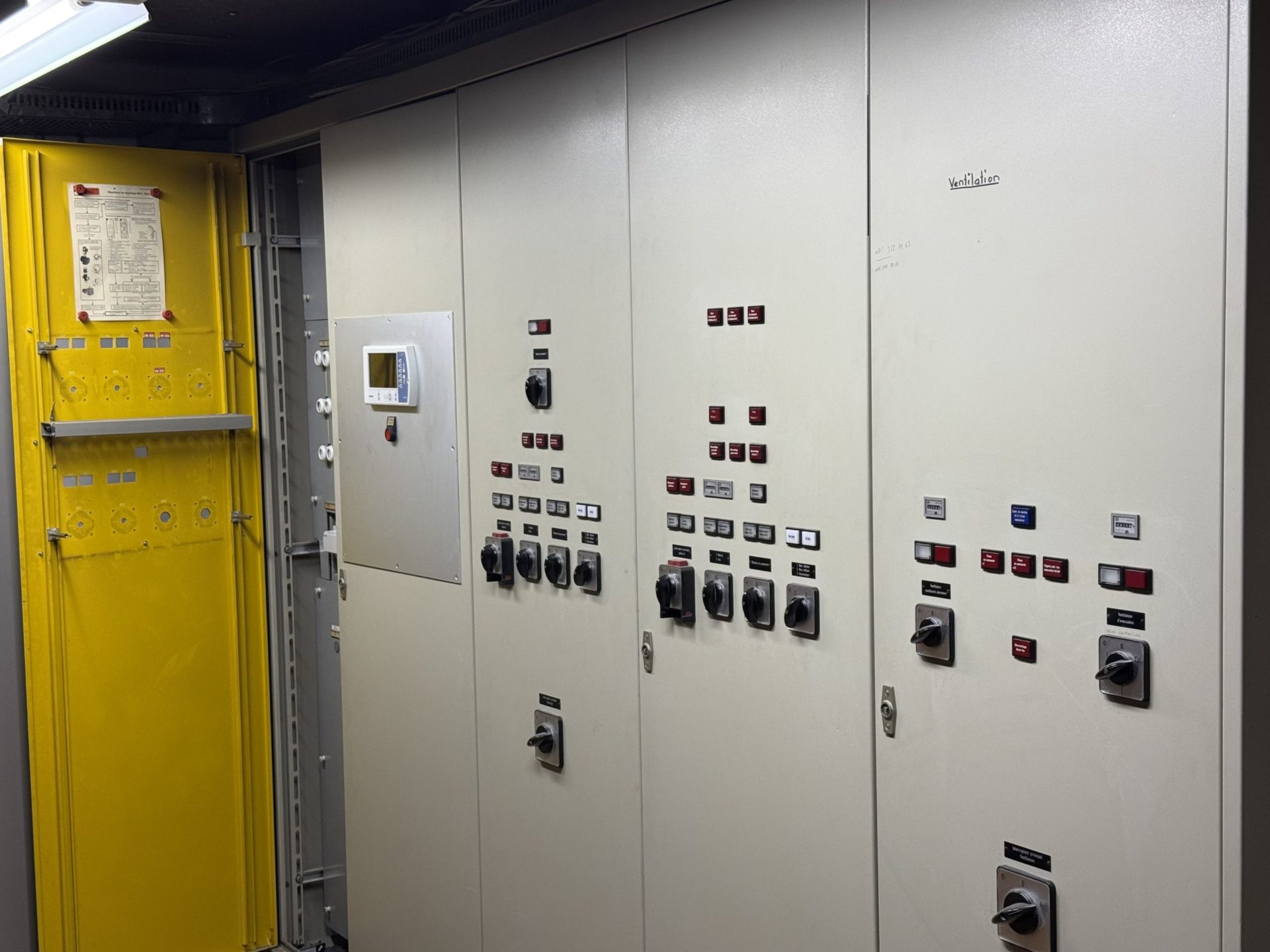
The five mistakes Workswell still sees regularly on BMS projects, and what we wish we could have said beforehand: late integration, closed systems, neglected training, skipped audits, sensors without intelligence.
A first conversation is usually enough to define the potential and the scope of the mandate.